Tuesday, September 19, 2006

New Guidelines for Sex Development Disorders - Parody


Sci-Fi by Curtis E. Hinkle

Release Date: Sept. 19, 2006
Planet Normalis Hermaphroditus

One particular planet in our galaxy has been plagued recently by more and more births of children who differentiate sexually into extreme male or female and this has caused the doctors and parents who are all hermaphrodites to study the underlying causes of this abnormality within their population. As a result, the doctors and parents have just announced the publication of new guidelines for the management of children born with disorders of sex differentiation, also known as DSD’s. The goal of the Consortium, a group of hermaphrodite doctors who wish to help male and female children by making them appear hermaphroditic, is to normalize these children so as to help both their parents who are hermaphrodites and the children themselves by making it possible for them to fit into a unisex society.

Sept. 19, 2006 — A consensus statement published in the September issue of the Archives of Disorders of early Childhood reviews the management of sex differentiation disorders in children.

"The birth of a child that is not a hermaphrodite prompts a long term management strategy that involves a myriad of professionals working with the family," writes Ian A. Phooey, MD, and colleagues from the Consensus Group from the Department of Pediatrics, University of Juno, Confederation Galactica.

"The initial contact with the parents of a child with a DSD is important, as first impressions from these encounters often persist," the panel writes. "A key point to emphasize is that the DSD child has the potential to become a well adjusted, functional member of society and pseudo-hermaphrodite who for all intents and purposes will be visibly indistinguishable from a true hermaphrodite."

Clinical evaluation should include family and prenatal history, general physical examination to detect any associated dysmorphic features, and assessment of the genital anatomy in comparison with published norms typical for hermaphrodites. Features suggesting DSD include overt genital absence of a phalloclit or a vaginal opening, a phalloclit that is too long or too short and gonads which are not mixed. The underlying causes could be a result of insensitivity to estrotestrogen and/or a lack of an extra X chromosome, making them XX or XY instead of XXY.

They have come to the following conclusions:

- All children must be legally hermaphrodites and be normalized to look like hermaphrodites.

- All phalloclits which are more than one inch long will be surgically corrected to appear normal.

- All phalloclits that are shorter than 2 centimeters will be hormonally corrected by testosterone injections.

- Any child born without a vaginal opening will be surgically corrected.

- In the end, all children will have phalloclits and vaginas and will be ready to participate in a unisex society.


The treatments to maintain health and normalization will need to be life long and any identities that do not conform to intergender (or hermaphroditic identity development) will be treated as a gender identity disorder and a specialist will help the children and adults develop a healthy hermaphroditic gender identity (intergender) so as to avoid extreme male and female identities which are bipolar disorder deviations.

The local Male and Female Human Rights Association on the planet heralded this as an advance in health care for all children who were born with a male or female sex differentiation disorder. Some splinter groups of males and females who actually are much bigger than the MFHRA are declaring this to be a violation of their human rights and demand to be accepted as the males and females they are.

The doctors and parents laughed at such a silly notion. The very idea - to let THOSE people have a say in our planetary affairs.

Our true faces – Why ask for help?


Being lesbian, gay, bi, trans, intersexed or a combination thereof is simply one variation among many other natural variations within the human population, perhaps less frequent, but just as normal and legitimate as any others which are part of what it means to be a human being. These variations are in no way a disorder, dysfunction, mental illness, nor a perversion and are not the result of faulty parental upbringing. They are also not a sin. They are ways of expressing the true face of the person, an aspect of the self which constitutes its deepest meaning and richness and one of the most essential components of the individual's identity. Why then seek help?


Article by Marie-Noëlle Baechler of OII-Switzerland
Translated from the French by Curtis E. Hinkle

(Disclaimer: The following is written within a Swiss legal/medical context and may not apply to laws in different states in the United States or in other countries. This is provided as a service to those wishing to know more about current thinking within other countries and is not meant to be taken as medical advice outside the jurisdiction of the author.)

It often turns out that from birth on, we grow up in an environment which denies us our right to our true face, which refuses to recognize our existence and forces us to hide this real face and disappear. We are denigrated and treated as having an illness or some type of dysfunction and this wounds us deeply and leaves profound and lasting scars.

Children's basic emotional needs

In order to grow up and develop a balanced sense of internal security, a feeling of wholeness that allows them to reach out to others and form well-adjusted relationships without dependency, a child needs to feel emotionally validated by their parents. They need to develop a sense of self-worth along with the parents. They also need to be given the opportunity to learn how to find their own way in life and cope with the difficulties which lie ahead. When they are not able to experience this, they remain dependent and that makes life very difficult.

A very destructive rejection

To have parents who refuse to listen to us when we feel different and to have to endure their violent reactions and be forced to behave like them, to react and live according to their norms by denying who we are is just the opposite of affectionate and emotional validation which we so needed as children. A child subjected to such treatment is sent a very powerful message that they are fundamentally bad, dysfunctional and unworthy. And when you are a child (or even a teenager) and dependent on them, it is extremely difficult to resist such messages and rebel against your parents.

Furthermore, this message does not end once out the door. It is reinforced at school, in the streets and in the media. And there are even many so-called mental health specialists and psychologists who also do not hesitate to spread and infect others with their own homophobia and transphobia.

Very serious and long-lasting consequences

To be born and brought up in such an atmosphere often induces a sense of sadness, depression, exclusion and not being able to form relationships with others. The child has such self doubt about their own self worth that it can become very difficult to meet new challenges and to establish affectionate and emotionally stable relationships with those they love. Some resort to substance abuse as a way to cope with the internalized suffering. Others go so far as to commit suicide.

A helping relationship based on respect and your specific needs

If this has happened to you, you may benefit from help from a professional chosen by you to meet your specific needs. The purpose should not be to normalize you but to help you accept yourself as you are and to integrate your difference as part of your overall self-worth and intrinsic richness. Such help can also give you the opportunity to finally experience the richness that you have to offer others and a sense of knowing who you are and what you need and enable you to meet the challenges which lie ahead. Such an experience can change your life. Such help can also assist you in coping with the abuse that you have been subjected to and to deal with your anger and resistance as important feelings worthy of respect and how to cope with these feelings in a positive manner.

Just because your parents were not able to able to accept you and love you as you were does not mean that you should continue living in the prison they locked you in as part of their effort to control you. Even though you might not have any other experience to compare your childhood with, that does not mean that what you were subjected to was normal. To change and free oneself takes courage but an increasing number of people have done it and know that embarking on this journey of liberation is worth it.

If you feel you could benefit from this type of help, it is essential that you find someone who will meet your specific needs and not the guidelines of a specific ideology, regardless of what that ideology might be. You have a right to demand unconditional respect of your identity, including your sexual orientation, gender and intersexuality. This is about an essential part of who you are, your true face and you are in no way obligated to accept help from someone who does not understand this. On the contrary, you can look elsewhere for someone who will respect you. You also have the right to demand that you be in control of your own life and to choose the method, pace and the approach which best suits you. If confronted with someone who is not able to accept you as the person you are, you have the right to refuse to be taken in by their reactions. You have the right to go elsewhere when confronted with an inadequate therapist.

You have the right to protect yourself

If you are a minor whose parents refuse to accept you for who you are and have made you go to a psychiatrist to be normalized, it is very important that you know that you don't owe this person anything, especially not the truth if telling the truth will be used to manipulate you, destabilize you and subject you to total submission and fragmentation. If you find yourself in a similar situation and are being confronted with a therapist who is not respectful towards the real you as lesbian/gay/trans or intersexed, do not hesitate to take all necessary measures to protect yourself. You do not owe anything to anyone who does not respect your true face and who acts in violation of basic ethical guidelines. And if you have trouble doing this by yourself, you may find help from a local LGBTI association.

OII- Virginia


Dalelynn L. Sims is an accidental activist and gender educator working toward advancement and diffusion of knowledge and understanding on gender issues. She is a former adjunct faculty member of three Community Colleges and has a degree in Christian Studies. It was her military experience that was instrumental in Dalelynn taking a stand about issues of gender. She was the person who actually helped start OII by getting a website developed for intersexed people who were not just English speaking, but from a variety of backgrounds and cultures. Dalelynn lives in the Brunswick County, Virginia with her partner and Harley, the wonder dog.

OII - Georgia


Rara Starblanket is a Chippewa Métis and is the council rep for Georgia and Florida, for the Métis Nations of the South.

Rara is a musician in the Atlanta area and has done this for the last 40 years, traveling around Canada and the U.S.

For more information and an essay on Two-Spirits, visit OII’s website at:

http://www.intersexualite.org/TwoSpirit.html

Sunday, September 17, 2006

OII - Colorado


Bobbie Ritacco


Bobbie was born intersexed, (CAH - XX), raised as male and later corrected the wrongly imposed sex assignment. She has 20 years experience as a systems engineer/manager and is now a nurse since a mid life career change. Her hobbies are skiing, the outdoors, and riding her Harley Davidson motorcycle.

Thursday, September 14, 2006

OII - Texas

Reade Sitton is a Senior Information Technology Consultant with a degree in economics and business data processing. His areas of interest are currently web development, and web programming with emphasis on open source languages and software. Porting of current platform specific software to platform independent forms. In the long term, "push button" automation of any kind involving computers specifically leading to better public policy. Application of such public policy within various political and economic systems worldwide.

Reade is a proud supporter and ally of the gay and lesbian community and has recently been very active in learning about intersex and listening to our stories, our experiences and aspirations. We thank him for his solidarity and support.

Member: http://allies.tamu.edu/

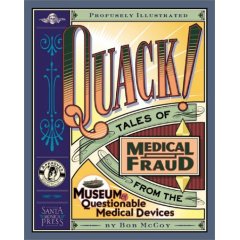
Medical Fraud and Quackery (Satire)


A fable by Curtis E. Hinkle

Imagine a world in which people were only allowed to have blonde or brown hair. The inhabitants of this world are totally convinced that all people can be divided into only two categories – those with blonde hair and those with brown hair. This is a myth but one that is so entrenched in the minds of the inhabitants that when a child is born with orange hair, they simply insist that the child’s hair really is either blonde or brown and they need to have experts from the medical community to help them diagnose what condition has resulted in the child’s disorder of hair development or DHD, formerly simply known as orange hair.

More and more orange haired people were starting to live openly without hiding their orange hair and were proclaiming that they were actually pleased with their natural color hair and resented all the prolonged enforced treatments that they had been subjected to in order to make them appear to have blonde or brown hair. A certain group called the Orange Hair Society of the Universe had been instrumental in making people with orange hair feel they had some right to be who they were.

As the years went by, the people in OHSU started insisting that they really were blonde and brown haired people and that in fact very few people born with orange hair actually identified as orange-haired people. They later decided that it would be better to do away with the very term used in the name of their organization – Orange Hair – and replace it with the term DHD – Disorder of Hair Development, but keep the name of the organization the same.

Many people with orange hair were very disturbed by this new terminology which made their hair color an illness and a disorder to be treated in childhood, something they had been working to change. Those who objected to this new disorder concept also felt that this would make children with orange hair even more ashamed and likely to want to hide who they were in a society structured only to accommodate people with blonde or brown hair.

The OHSU started selling guidelines that medical quacks had come up with for dying the hair of all infants born with orange hair. In this consensus statement published by a Consortium for the management of infants born with DHD’s, a whole group of very different medical illnesses and disorders were grouped together under this new medical diagnosis called a Disorder of Hair Development. The OHSU published news releases with great fanfare stating that this was a big breakthrough for the treatment of children born with orange hair and that these new guidelines written by quacks would finally help us move away from the single-minded focus on hair color and start dealing with the real health problems of children with DHD’s.

What was so fraudulent about all this was that this new diagnosis – DHD – included diseases that had nothing at all in common. It included diseases that affected a sizeable part of the population but very rarely resulted in orange hair along with other conditions that always caused infants to be born with orange hair and other conditions which might cause an individual to develop orange hair later in life. The underlying causes for developing orange hair were so different that one was left to wonder how this new diagnostic scheme could actually facilitate any sort of recommendations concerning medical care for people with this new disorder other than treating the color of the hair because that was the only thing that all these different conditions had in common. Other than that, the health needs of the individual children with DHD’s would be so different from group to group, condition to condition, that a consensus would actually be impossible because they had no real medical illnesses in common.

Adults affected with orange hair started reading the guidelines and discovered that the whole consensus was simply fraudulent in its allegations that this was about treating the real health needs of infants with orange hair. After reading through the guidelines of the Consortium, many adults with orange hair realized that the guidelines were nothing but a handbook for removing any evidence of orange hair that would be visible in public and telling the parents and legal authorities which color of hair the infant really should have – blonde or brown. Each condition which might produce an infant with orange hair was accompanied by the appropriate blonde or brown hair category and that category would be imposed on the child without consent based solely on the condition the child was born with.

The OHSU has published in it latest press release that these guidelines published by the Consortium for the management of Disorders of Hair Development in infants are not about hair color but a great step forward in the health care of orange haired people.

Tuesday, September 12, 2006

Cancer in Our Lives


Join us at “Cancer in Our Lives” a two-day event in San Francisco October 13th and 14th, 2006. See attached event flyer.


We know that lesbian, gay, bisexual, transgender and intersex people are at greater risk for some cancers and less likely to access necessary and appropriate diagnostic and treatment resources.

In this two day event we will put a personal face on cancer in our communities, confront our unique obstacles to care, look at the promising science emerging to prevent some cancers and talk with each other about what strategic steps are needed to move forward in this fight.

To learn more about this exciting event and to register to attend visit
www.wcrc.org/lgbtqi


Friday, October 13, 2006
Health Professionals Focus on Cancer

In collaboration with the Gay and Lesbian Medical Association annual conference.
Parc 55 hotel, San Francisco
$50 registration fee. No one turned away.

Saturday, October 14, 2006
Community Focus on Cancer
San Francisco LGBT Community Center
1800 Market Street, San Francisco
This event is free.

Visit the event website for a complete program listing, to register for Friday, Saturday or both days and for additional details.
www.wcrc.org/lgbtqi

To learn more about the 24th annual Gay and Lesbian Medical Association Conference visit www.glma.org

Event partners making this dialog possible include the American Cancer Society, CA Division, Inc., the California Breast Cancer Research Program, the Gay and Lesbian Medical Association, the Lesbian Health & Research Center, the Mount Zion Health Fund, the San Francisco Public Health Department, the UCSF Comprehensive Cancer Center, the UCSF Department of Urology and the Women’s Cancer Resource Center in Oakland.

Monday, September 11, 2006

DSD - Is there really a consensus?


Photo: Leading DSD Expert

We in OII have been interested in the new term which those who feel they speak for us are now imposing on us. Just as our sex was imposed on us without our consent, now the experts and DSD activists are imposing pejorative terminology on us as our new identity. Was there really any consultation of those directly affected by this new pejorative identity label? It appears there was not. Most of us do not identify as disordered nor do we feel that our sex is disordered.

You can find information here about how we feel:
http://oii-usa.blogspot.com/2006/08/three-intersex-activists-defend.html

Scroll down to read letters from intersex activists about DSD on the following site:
http://adc.bmjjournals.com/cgi/eletters/91/7/554
You will notice that those in favor are mainly doctors.

The Organisation Intersex International did a survey:
http://www.intersexualite.org/English_OII/IAIA/IAIA_index.html
DSD Survey results thus far:
http://www.intersexualite.org/English_OII/dsd_survey/dsd_survey.html

Friday, September 08, 2006

Jim Costich - OII - New York


Jim Costich is a very talented writer, singer and parent by choice. He is a very proud intersex gay man. We are very pleased in OII-USA that he is willing to share his many talents and insights on intersex and its intersections with other communities. Jim's primary focus is on community building with GLBT allies and empowerment through solidarity with other oppressed minorities.

You can read some of Jim's writings on our website at:
http://www.intersexualite.org/English_OII/IAIA/Jim/Jim_Writing.html

Being Different And Fitting In

By David Cameron


OII-USA Spokesperson for Human Rights

Visit OII-USA's new website at:
http://www.intersexualite.org/oii-usa-index.html

Visit our international site: The largest intersex organisation in the world

Organisation Intersex International

I can’t believe I’ll turn 60 next year. I’m amazed I’ve lived this long and survived my life as a queer person of sorts. It has never been an easy journey; in fact, it’s been very difficult, being different and trying to fit in, not only in the two-sex/two-gender binary system at large, but also in the ever-evolving gay culture. Most people when they see me read me as a “tall masculine guy,” but that wasn’t always the case and in some ways still isn’t. I’m still seeking a welcoming community where I feel comfortable and accepted for who I am.

One’s sex is different from one’s gender identity. Both are different from one’s sexual orientation. The religious right likes to meld us all into one, as if we were all the same queer species. Gay men/males come in all colors, styles, sexed anatomies, expressions and sexual experience. We need to celebrate the diversity that we bring to our irreplaceable and special world.

We are diverse gay men! But what do we mean by “gay men” and, in particular, what do we mean by “male” or “man”? We know the stereotypical characteristics that all gay males/men are supposed to possess: hyper-masculinized appearance, an adequate phallus/penis size (hopefully something over 3 inches when erect), and being able to stand to pee. But what else should we possess in the sexual anatomy department? Well, I guess we’re supposed to have two testicles in a scrotum that produces sperm and testosterone (and some estrogen so we act nice occasionally). And we need sex chromosomes, which are XY for the standard-looking male.

Can a gay male/man have any other sexual anatomy than what we presume to be standard or normal? There are many boys born with micro-penis, and in the past century many were reassigned female and given vaginoplasties. Yikes! Doctors seem to think a man needs an adequate penis only for vaginal sex. Some people are born with ova-testis and others with blind vaginas. People come in all sorts of sex chromosome variations too: XXY, XXX, XYY, XXYY, XXXY, XO, XY females (known as androgen insensitivity syndrome) and XX men, XY/XXY and all sorts of other mosaic patterns.

Can any of these persons be considered males/men? It depends on how they identify, if they are not aborted first. Although most people on the planet come in the two standard-sexed bodies, many of us do not. Depending on how “intersex” is defined, variations exist in anywhere from 1 in 150 to 1 in 2000 births. Doctors still perform infant genital surgeries (and hormonal interventions) five times a day in the USA. I guess they feel pressured by our binary-addicted culture. How can a doctor decide what is best for a child’s future sex life? What if that child were destined to grow up into a gay man?

When I was 13 and puberty came, I knew I was different from other boys. I still hadn’t developed like others, and I was often teased for having small testicles, and I had gynecomastica (breast growth in a male). I was also very tall; by 15, I was 6’ 9”. My energy was very low and I was a shy, awkward, emotional, self-conscious and sensitive “feminine” kid. My parents were concerned about my lack of development. They were told by the family doctor I would grow up to be “normal” and be able to have children.
I experimented sexually a lot with boys starting in junior high and struggled with my sense of gender and sexuality all through college. I was told by religious leaders that the feelings I had for men were just a phase and that I would eventually turn heterosexual. I tried to be bisexual and had a few girlfriends. In my mid-twenties, I enjoyed dressing up in drag and discovered a whole newworld that was exciting and creative. I came to hate traditional gender roles with a vengeance! And I wasn’t sure what world I really belonged to. I knew I was different, and I wanted to fit in somewhere.

When I was 29, I went to an infertility clinic because I wanted to find out if my body produced any sperm, since I had my doubts. (I remembered reading in a high school biology text that giants were usually sterile.) Although I treasured my difference, I wondered why I had small breasts, big nipples and a smooth feminine-looking physique, never having developed a musculature like other guys my age. After several tests, I was informed that I had XXY sex chromosomes, 10 percent of the standard testosterone production levels for an XY male and no sperm. I was offered breast reduction surgery and testicular implants but refused. I’ve since learned that this anatomical variation happens 1 in 500 “male” births, is called Klinefelter’s Syndrome, and exists within various creatures in the animal kingdom.

I was OK with the body I was born with but my endocrinologist apparently was not. He prescribed 300 mg of synthetic testosterone to be injected every two weeks for the rest of my life. He never told me what was going to happen, offered me no counsel, and told me to consult a medical journal for more information. I went through puberty again in my 30s. I only enjoyed the high sex drive induced by the treatments because I had never experienced being horny when I was a teenager. What wasn’t explained to me was that my body was going to masculinize. My once hairless body became covered with hair (much to my disgust) while I started losing my beautiful auburn hair to baldness. I became quite strong and trim. My voice dropped from a first tenor to a baritone. I also became HIV positive within the first five years of injecting testosterone. That is another story.

I had always felt caught between the sexes without knowing why. Emotionally and spiritually, I have always felt more feminine. During the first few years of testosterone replacement therapy, I felt that my female persona was dying. It was a time of overwhelming confusion, yet also a time of discovery. My sexual orientation hadn’t changed; I was still attracted to men. I didn’t understand why I had been chosen to have this experience, and I often wondered whether I should have stayed who I was. I knew that being “caught between” would be my life challenge and that would be OK since I felt whole with all my unique parts. I have since gotten back in touch with my female side, and I have realized that I never completely lost her. In the end, because I was so tall, I decided to find out what being male was like. I guess I’m still finding out.

For many years I was filled with shame and a sense of freakishness, and was told by my parents to keep my secret. I didn’t learn until 1995 that what I had was an intersex condition, that who I was originally was OK, and that I never had to take any hormones to change the way I looked. I like the term “intersex” because I prefer more choices than male or female. I think there is a continuum from male to female, like shades of grey between black and white. If only I had always known it was OK to be different and that I didn’t really need to fit into our binary system, I think I would have been a much happier person. I might have avoided some of the pain that I’ve had to endure to fit in. It’s been hard to feel like I belong to a community, any community.

When others look at me, they probably see a big, hairy, bearded, and very tall man. In many ways, I look and act like a typical San Francisco gay man. I guess most people see me like that and don’t think anymore about it. But I know that the truth is much more complicated. If you see a guy who looks “masculine,” just remember you can’t judge a book by its cover. And not all of us were created to populate the planet into extinction.

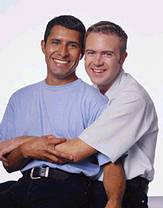
I was fortunate to meet a wonderful male partner who helped me through my transformation and has continued to love me just the way I am. We’ve been together for 28 years.

I want to be a part of a healthy and caring LGBTIQQ community where “difference” is seen as an attribute, not a detriment. We are all diverse. We belong to many different communities. We are not all the same. Many even in our community feel pressured by our binary-addicted culture. And many of us feel like we don’t fit in. I decided that telling the truth of my story and educating others about who I am is the only way to go. I think as gay men we are always trying to figure out what it means to be a man. And many of us are looking for a community to belong to. My journey is maybe just a little more unusual.

David Cameron was born in Canada, and grew up in Pleasant Hill, CA. He is a former international teacher, having taught in Thailand and Egypt. He met his partner, Peter Tannen, at a bisexual potluck in Sunnyvale. David had a home and garden renovation business prior to going out on AIDS disability and currently volunteers at the STOP AIDS Project. In addition, he serves as an appointed member of San Francisco’s Human Rights Commission’s LGBT Advisory Committee and is a Coordinating Committee member of the LGBTI Health Summit to be held in Philadelphia in March 2007.

Wednesday, September 06, 2006

Out and Proud!


OII – USA is the United States affiliate of the Organisation Intersex International, a non-profit organisation incorporated in the Province of Quebec, Canada. We have members throughout the United States. OII – USA resists all efforts to make intersex invisible, including genital mutilation, medicalization and normalization without consent and offers another face to intersex lives and experience by highlighting the richness and diversity of intersex identities and culture.

We have members throughout the United States. Please feel free to contact them for more information about OII and its outreach programs:

Official Contacts:
CALIFORNIA David Cameron
CALIFORNIA Arianna Davis

GEORGIA Rara Starblanket

ILLINOIS Shauna Baggett

NEW JERSEY Prof. M. Italiano
NEW YORK Jim Costich
middlesex1957@yahoo.com


NORTH CAROLINA Taylor Holder

OREGON Bhakti Ananda Goswami

SOUTH CAROLINA Curtis E. Hinkle

TEXAS Reade Sitton

VIRGINIA Dalelynn Sims

WASHINGTON Tom Odegard/Ms.G

Monday, September 04, 2006

OII-USA member, David Cameron, and his partner Peter featured in film

"One in 2000" is a 26-minute piece that is being sent out to several festivals. The producer and artist of this film also hopes to distribute it either through the educational circuit or perhaps PBS or cable access stations. See below for festival showings in your area. If you have any suggestions as to other venues to send it, please inform Ajae, the producer, by writing directly to her at the following address:

aclearway@austin.rr.com


UPCOMING FESTIVALS:

TEXAS

Cinematexas September 20-24
www.cinematexas.org
Austin, TX
(check schedule for screening date)

AGLIFF Austin Gay Lesbian International Film Festival
September 29-October 8
Austin, TX
www.agliff.org
Part of "Black & White" program
"One in 2000" screening
2:40PM Oct 7
Regal Arbor Cinema

CALIFORNIA
Mill Valley Film Festival
October 5-15
www.mvff.com
(check schedule for screening date)

ARKANSAS
Hot Springs Documentary Film Festival
October 20-29
www.hsdfi.org
(check schedule for screening date)

INTERNATIONAL
NextFrame Film Festival
(UFVA) University Video Association's Touring Festival of
International Student Film & Video
"One in 2000" wins 1st Place in Documentary Program
www.temple.edu/nextframe/
(check schedule for screening dates and locations)

Saturday, September 02, 2006

Full Human Rights for the Intersexed

OII – USA Mission Statement on Human Rights

As a result of the arbitrary division of sex into only two legal categories, the intersexed are deprived of one of the most basic human rights, to live and be legally accepted for who they are – intersexed. Sex is not dimorphic and the two sexes, male and female, are not discrete biologically accurate categories. As a result we will never have a precise definition of what a man or a woman is because there will never be a way to establish a precise definition without intersex people being mutilated, normalized and forced into one or the other category. We therefore propose:

1) That no one who is intersexed should be arbitrarily imposed an assignment in either of these legal categories because it deprives us of basic human rights by sanctioning normalization and bigotry against our natural sex – intersex.

2) That either the government stop the sexist binary assignments altogether and allow all people the right to identify themselves socially as the sex they know they are or that intersex people be granted the same legal status that all other people with standard male or female anatomies have – intersex as our legal sex with the right of the individual intersex person to request this legal status which would allow them to marry whomever they wish, to have total legal protection against sex harassment that males and females currently are granted and to live openly and proudly as who we are with legal and medical acknowledgment of our sex. Since some intersex persons do identify as male or female, no coercion by the government should be used to force them to change their legal status from male or female which would also be a violation of their basic human right to self identify.

3) It is our hope that all society would benefit by openly acknowledging the presence of intersexed individuals, not just the intersexed. In so doing, many sexist stereotypes and other unnatural gender norms would be officially destabilized.

4) We openly affirm that we are proud to be who we are and demand an end to the silence, shame and forced normalization which is institutionalized against us and legal in our country.

Intersex House Candidate from Maryland

Excerpt:
"Beyer was raised mostly in Queens, N.Y., the first of two children born to a Conservative Jewish family. She said she was born intersex, her gender identity confused by conflicting genitalia, a condition she ascribes to the drug DES, which was prescribed to her mother during pregnancy. Puberty plunged her body into hormonal civil war."

Hoping Md. Is 'Ready for a Person Like Me'
House Candidate Would Be State's 1st Transgender Lawmaker

To read the whole story:
http://www.washingtonpost.com/wp-dyn/content/article/2006/09/01/AR2006090101461_pf.html

Saturday, August 26, 2006

Three intersex activists defend children against pejorative terminology

Three intersex activists who were included in the manual of the DSD guidelines have now made it clear that they do not agree with the new terminology. When they agreed to have their experiences and intersex histories included, they were not fully informed of the actual terminology nor all the implications of the publications of the Consortium for the Management of Disorders of Sex Development.

I wish to express my deep gratitude to David Cameron, Peter Trinkl and Esther Morris Leidolf for their courageous stand against this pejorative terminology. What they have done is very powerful and helps all of us in our struggle to live openly and without shame. They worked to help change the current health care of intersex children but have the courage to make their feelings known about this terminology which is consistent with their reason for agreeing to participate in the first place.

You can read the disclaimer which is now in the web version of the DSD guidelines.

Excerpt from the DSD Guidelines:

“We are grateful for the participation of David Cameron, Peter Trinkl, and Esther Morris Leidolf in this project. However, they would like to make it known that they do not support the term “Disorders of Sex Development.”

In solidarity,
Curtis E. Hinkle
Founder, OII

To read the excerpt in context:
http://www.dsdguidelines.org/htdocs/parents/acknowledgements.html

Cancer in Our Lives: Raising Awareness in the LGBTQI Community

David Cameron, OII-USA Spokesperson for Human Rights is pleased to announce that Dr. Milton Diamond will be speaking at the GLMA Plenary panel on Cancers Affecting Lesbians, Bisexual Women, Trans Folks and Intersex Folks on Friday, October 13, 2006 at 1:00 – 2:30. This event is part of the 24th Annual Conference of the Gay and Lesbian Medical Association to be held October 11-14, 2006.

Renaissance Parc 55 Hotel
San Francisco, CA
For more details:
http://cancerinlgbtqilives.googlepages.com/fridayagenda

On the 14th of October, Dr. Milton Diamond, Mani Bruce Mitchell, intersex activist from New Zealand, and David Cameron will be doing a workshop at the SF LGBT Community Center on "Intersex and the Threat of Cancer." They plan to show the film "XXXY", have a discussion about cancer and some Q&A during the 60 minute session.

LGBT Community Center
1800 Market St
San Francisco, CA 94102
(415) 865-5555

http://www.sfcenter.org/

The evening of the 14th, David and his partner Peter will be hosting an invitation only 10-year anniversary reunion & celebration of "Hermaphrodites Speak" at their home. More details to follow.

OII-USA Spokesperson for Human Rights

David Cameron attended his first ISNA support group meeting in 1995 and within the year became ISNA’s first volunteer! He served as a board member from Dec. ’02 through Dec. ’05. As a person with XXY sex chromosomes, David has written about his experience in Hermaphrodites with Attitude, Chrysalis, and Alice Dreger’s book Intersex In the Age of Ethics. As an adult, David was hormonally masculinized by testosterone therapy without his “informed” consent.

He served as an appointed member to the San Francisco Human Rights Commission LGBT Advisory Committee and was a member of their Intersex Task Force. This Task Force was the first governmental organization in the U.S. to organize a public hearing on intersex treatments that involve gender assignments. After the historic hearing in May 2004, the Task Force developed the Intersex Report, with findings and recommendations, and was adopted by the Human Rights Commission in May 2005. David is further advocating for intersex people and taking our issues to the California legislature in hopes of enacting some of the recommendations of the report.

David lives in San Francisco with his domestic partner, Peter, whom he met in 1978. David is a long-term HIV/AIDS survivor and does volunteer work with the Stop Aids Project.